
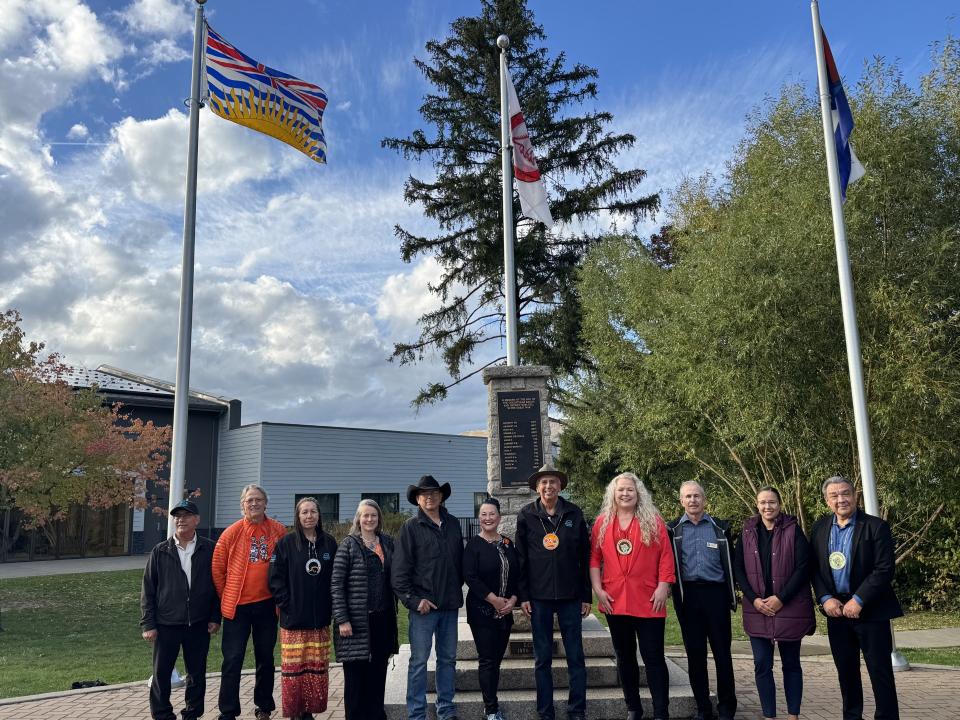
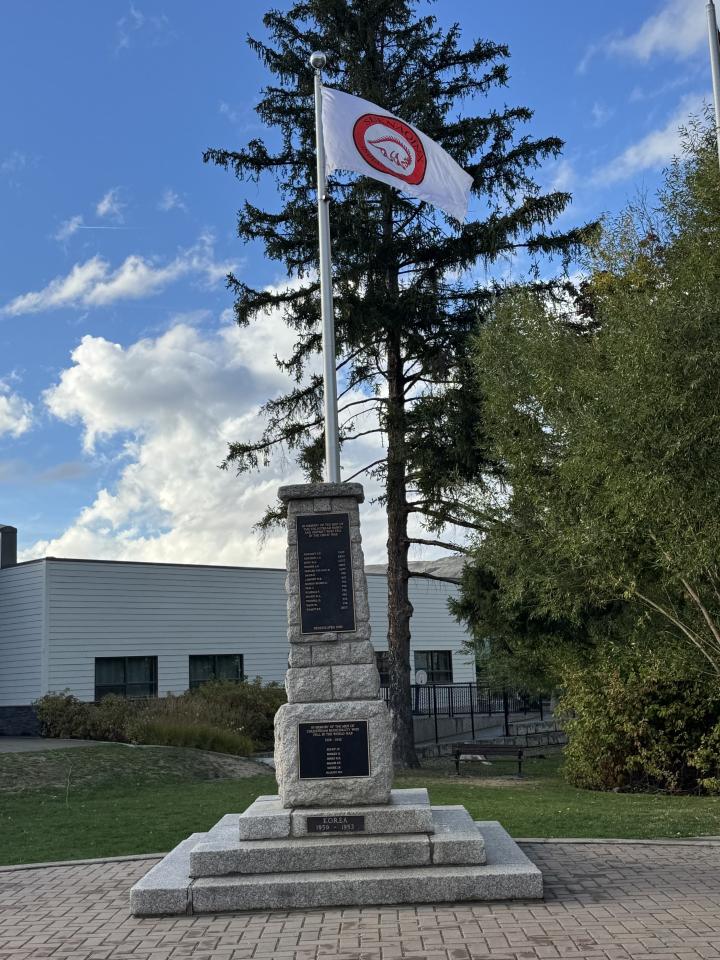
The Okanagan Indian Band (OKIB) and the District of Coldstream came together on September 29, 2026 for a meaningful ceremony marking the raising of the Okanagan Indian Band flag at Coldstream’s Cenotaph Park.
The OKIB flag now flies permanently alongside the Canadian, British Columbia and District of Coldstream flags at the Cenotaph, recognizing the enduring presence of the syilx people in their traditional ancestral territory, their deep connection to the land, and the growing relationship between the Okanagan Indian Band and the District of Coldstream.
Members of the Okanagan Indian Band, District of Coldstream Council and staff, and community members gathered for the ceremony, which provided an opportunity to recognize the significance of the occasion and reflect on the importance of continued relationship-building.
The Okanagan Indian Band flag represents the identity, culture, history and enduring presence of the Okanagan Indian Band and the syilx people. Its permanent place at Coldstream’s Cenotaph Park is a visible recognition of that presence and a reminder of the shared lands, waters and connections between the two communities.
“Our people have been here since time immemorial, and our history is part of the history of this region." says Chief Dan Wilson. "During both World Wars, our people answered the call to serve, and many made tremendous sacrifices. Having the OKIB flag flying permanently at Cenotaph Park is an important recognition of that service, our shared history and our continued presence here. It is also an opportunity to remember those who came before us and to strengthen the relationship between our communities for future generations.”
The ceremony provided an opportunity to reflect on the continued work of truth and reconciliation. Truth and reconciliation is an ongoing journey that requires continued listening, learning, dialogue and action. The Okanagan Indian Band and the District of Coldstream recognize that meaningful reconciliation is built over time through respectful relationships and a willingness to work together.
“September 29 was about more than raising a flag,” said Mayor Hoyte. “It was about recognizing the history and presence of the syilx people, honouring the relationship we are building with the Okanagan Indian Band, and reaffirming our commitment to continuing this important work together. We are grateful to everyone who joined us for this special occasion.”
Both communities look forward to strengthening their relationship, creating opportunities to come together, learn from one another and work collaboratively on matters of shared importance.
Historical background
The Okanagan Indian Band and syilx Okanagan Nation have a long history of military service and contribution during times of war. As a horse nation, the syilx Okanagan supplied horses in support of British military efforts during the Boer War and again during the First World War.
During the First World War, every eligible Okanagan man between the ages of 20 and 35 from Head of the Lake volunteered to serve. Among those who served was Private George McLean, who received the Distinguished Conduct Medal for his actions during the war.
The syilx Okanagan’s 100 per cent war effort during the First World War was recognized in the 1930s when Chief Pierre Louis received a medal from King George V. The syilx Okanagan again contributed a 100 per cent war effort during the Second World War. That contribution was recognized in the 1950s when Chief Pierre Louis received another medal, this time from Queen Elizabeth II.
Syilx Okanagan people continued to serve in later conflicts, including the Korean War, while some also served with the United States military during the Vietnam War.
This long history of service and sacrifice gives particular significance to the permanent raising of the Okanagan Indian Band flag at Cenotaph Park.
The flag will remain a permanent part of the Cenotaph Park landscape — a visible symbol of respect, recognition, relationship and the shared commitment to continue the journey toward truth and reconciliation.